Dharmendra Pradhan is no longer India’s education minister. He stepped down, after weeks of protests at Jantar Mantar over a leaked NEET-UG paper and a botched CBSE revaluation process. The exam, meant for 2.27 million medical aspirants, was cancelled in May. Students camped in the Delhi heat for over six weeks. The government finally blinked.
This should feel like a win. In some ways, it is. Accountability matters, and a resignation sends a signal that public anger cannot be ignored forever. But a resignation is not a reform. It closes one chapter of outrage. It does nothing to the machinery that produced the outrage in the first place. The paper leak was not the disease. It was a symptom, and a fairly predictable one, of a system that has been under strain for a long time.
That distinction matters, because India now faces a choice. It can treat this as a scandal that has been managed, file it away, and wait for the next one. Or it can ask a harder question: what would it actually take to fix Indian education, not just its exam-conducting agencies?
The gap between what students want and what the system offers
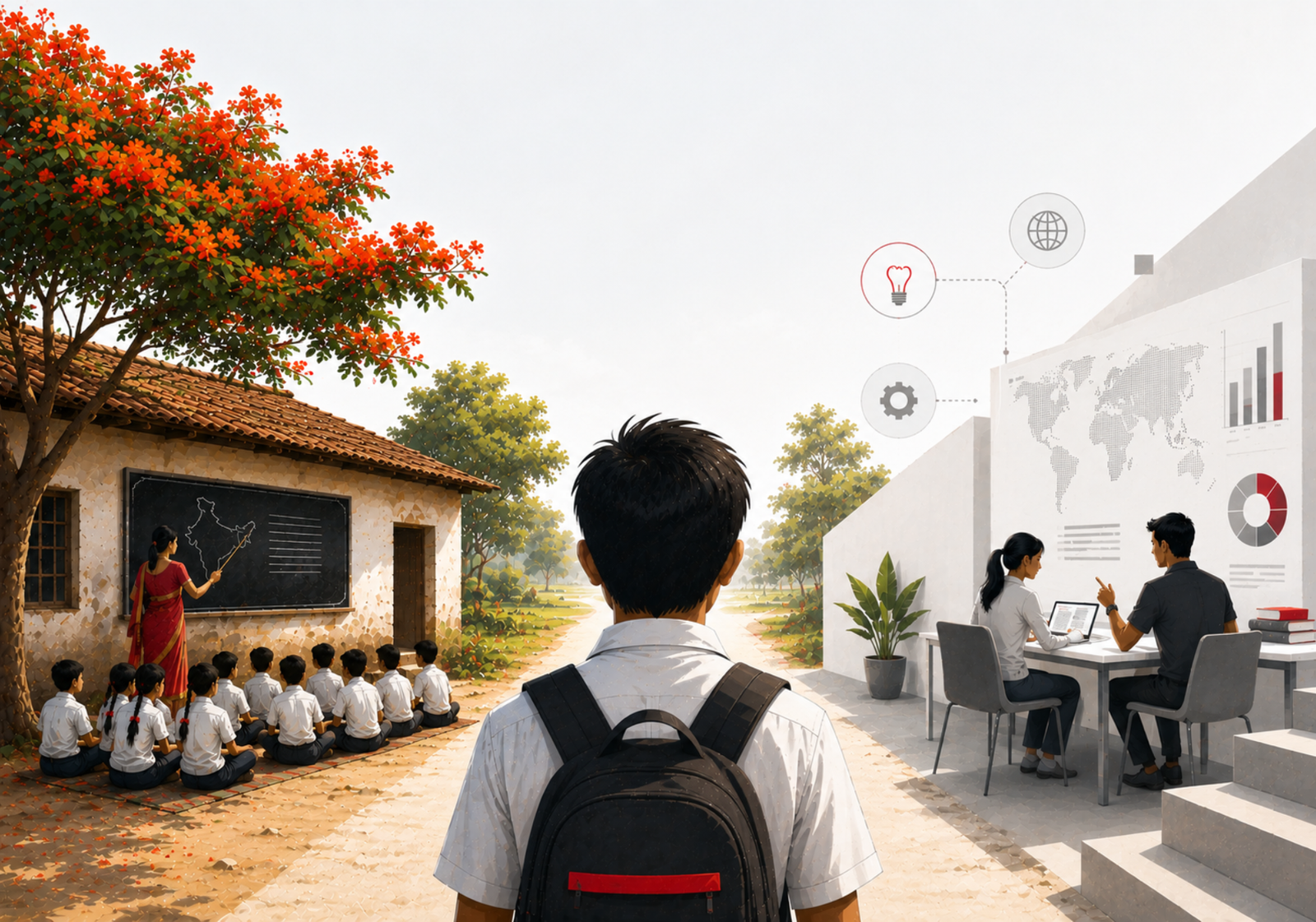
Start with what young Indians are actually preparing for. This generation has grown up with smartphones, gig work, AI tools, and a global labour market. They want skills that translate into jobs, not just certificates. They want flexibility, creativity, and some say in what they study.
What the system offers them instead is a narrow funnel. One exam, taken on one day, decides whether a eighteen-year-old becomes a doctor or does not. Coaching institutes have built an entire economy around cracking that funnel, not around learning. The India Skills Report 2026 found graduate employability at 56.35 percent, a genuine improvement over recent years. But the same period has seen youth unemployment run at nearly three times the overall rate, and over two-thirds of unemployed Indians aged 20 to 29 hold a degree, according to the State of Working India report. Something is misaligned between what classrooms teach and what the economy needs. A leaked paper is a crisis. A generation trained for jobs that don’t exist is a slower, quieter one.
There is also a quieter divide inside this story, one that rarely makes it to Jantar Mantar. The students protesting in Delhi are disproportionately urban, English-comfortable, and already close enough to the system to fight it. A much larger number of aspirants, first-generation learners in small towns, students studying in regional languages, those without access to a coaching centre or even reliable internet, never get close enough to a leaked paper to be angry about it. They drop out earlier, or never enter the race at all. Any overhaul that only fixes exam security for those already in the funnel will leave the wider access problem exactly where it was.
How the system got this way
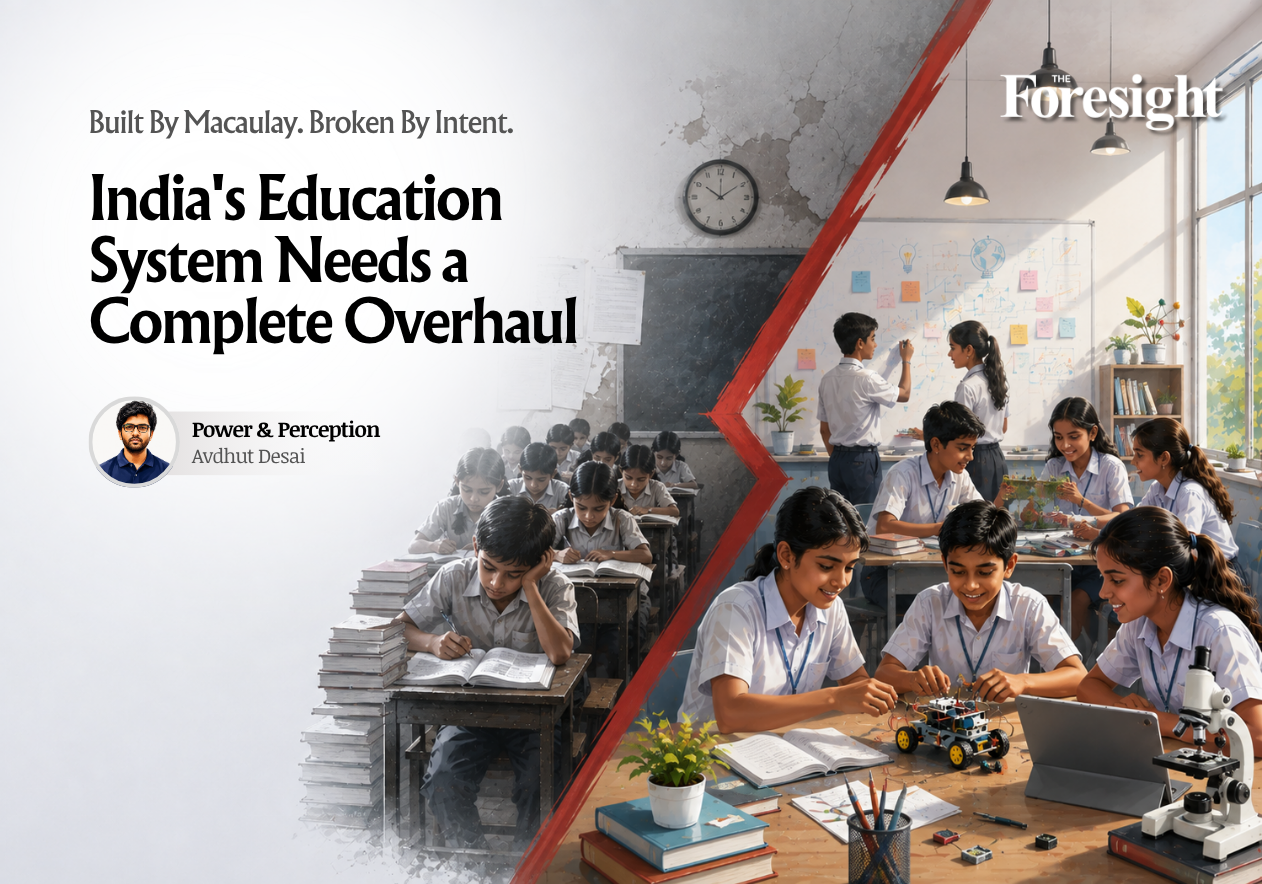
None of this happened overnight. India’s oldest learning traditions, the gurukul model among them, were not built around examinations at all. They valued dialogue, memory paired with understanding, and apprenticeship. Colonial rule changed that. Thomas Macaulay’s 1835 minute on education reshaped Indian schooling to produce clerks for the colonial administration: people who could read, write, and follow instructions, tested through standardised examinations. Rote learning was not an accident of that system. It was the design.
Independence did not fully undo this inheritance. The exam-centric structure stayed, partly because it was easy to administer at scale, and partly because it offered a seemingly fair, anonymous way to sort a very large, very young population. Then came liberalisation, an explosion in aspiration, and a narrow set of prestige institutions, the IITs and top medical colleges, that could not expand fast enough to meet demand. Coaching centres filled that gap. Kota, in Rajasthan, became a symbol of this economy: tens of thousands of teenagers living away from home, taking test after test, for a shot at a handful of seats.
The human cost of that model is well documented. Kota recorded 17 student suicides in 2024, after 22 the year before, most linked to exam pressure and fear of failure. These are not statistics from a fringe problem. They are a direct reading of what an entire generation is being put through, in service of a sorting mechanism built two centuries ago for a different purpose.
What the rest of the world does differently
India took the PISA test once, in 2009. It ranked 72nd of 74 participating countries in maths and reading. The government withdrew from the next four cycles, including PISA 2025, even as more than 90 other countries took part. That withdrawal is itself a data point about how Indian policymaking has often responded to uncomfortable comparisons: by opting out of the comparison, rather than fixing what it reveals.
Spending tells a similar story. General government expenditure on education in India has actually declined, from 2.9 percent of GDP in 2019-20 to about 2.7 percent in the 2025-26 budget estimates (or around 4.1% when combined Centre and state spending is considered, according to PRS India), well short of the 6 percent target the National Education Policy itself set in 2020. South Africa spends 6 percent of GDP on education. Brazil spends 5.6 percent. China and Russia both spend around 4 percent. Finland, often cited as a benchmark, spends heavily but also gives teachers years of training, high status, and classroom autonomy, with far less standardised testing than India relies on. Singapore and South Korea are just as exam-driven as India, arguably more so, but they pair that rigour with well-funded, well-staffed schools and teacher quality that India has not matched at scale.
It is worth noting where India does compete globally. Its top engineering institutes are climbing world rankings; 54 Indian universities featured in the QS World University Rankings 2026, the fourth-highest count of any country, behind only the US, UK, and China. That is a real achievement. It also exposes the fault line more sharply. India can build islands of world-class higher education. It has struggled to build a school and entrance-exam system that serves the much larger number of students who never reach those islands.
What an actual overhaul would touch
A serious fix would not stop at exam security, encryption of question papers, or a new testing agency, though all of that is necessary and overdue. It would have to touch harder things. Teacher training and pay, so classrooms are not the weakest link in the chain. Curriculum reform that moves from memorisation to application, something NEP 2020 promised on paper but has been slow and uneven in reaching actual classrooms six years on. Reducing the stakes attached to any single exam, so one bad day, or one leaked paper, does not define a young person’s entire future. Coordination between the Centre and states, since education sits on the concurrent list and reform requires both to move together, not always a given in India’s federal politics.
It would also mean confronting an uncomfortable interest group: a coaching industry worth billions of rupees, built entirely around the current system’s flaws. Genuine reform that reduces exam stakes or broadens access threatens that business model directly. That resistance rarely announces itself as resistance. It shows up as caution, as delay, as reasons why change should wait another year.
There is also the question of what schools measure in the first place. An overhaul worth the name would widen the definition of achievement beyond a single rank or percentile, toward continuous assessment, practical skills, and some room for students to be good at different things at different speeds. It would put trained counsellors and mental health support inside schools and coaching hubs as a baseline requirement, not an afterthought added after a suicide makes the news. None of this is exotic. Several state boards and a handful of private schools already do versions of it. The gap is not knowledge of what works. It is the will, and the funding, to make it the norm rather than the exception.
The angles that remain open
There is a version of this story where the protests forced accountability and the system quietly resets to business as usual, with a new minister and the same structure underneath. There is another version where this becomes the moment India finally treats school and entrance education with the seriousness it has brought to its top universities. There is a third version where nothing changes because too many stakeholders, coaching businesses, state governments, exam bodies, benefit from the system staying exactly as broken as it is.
Which version plays out is not yet decided. It will not be decided by one resignation, however deserved.